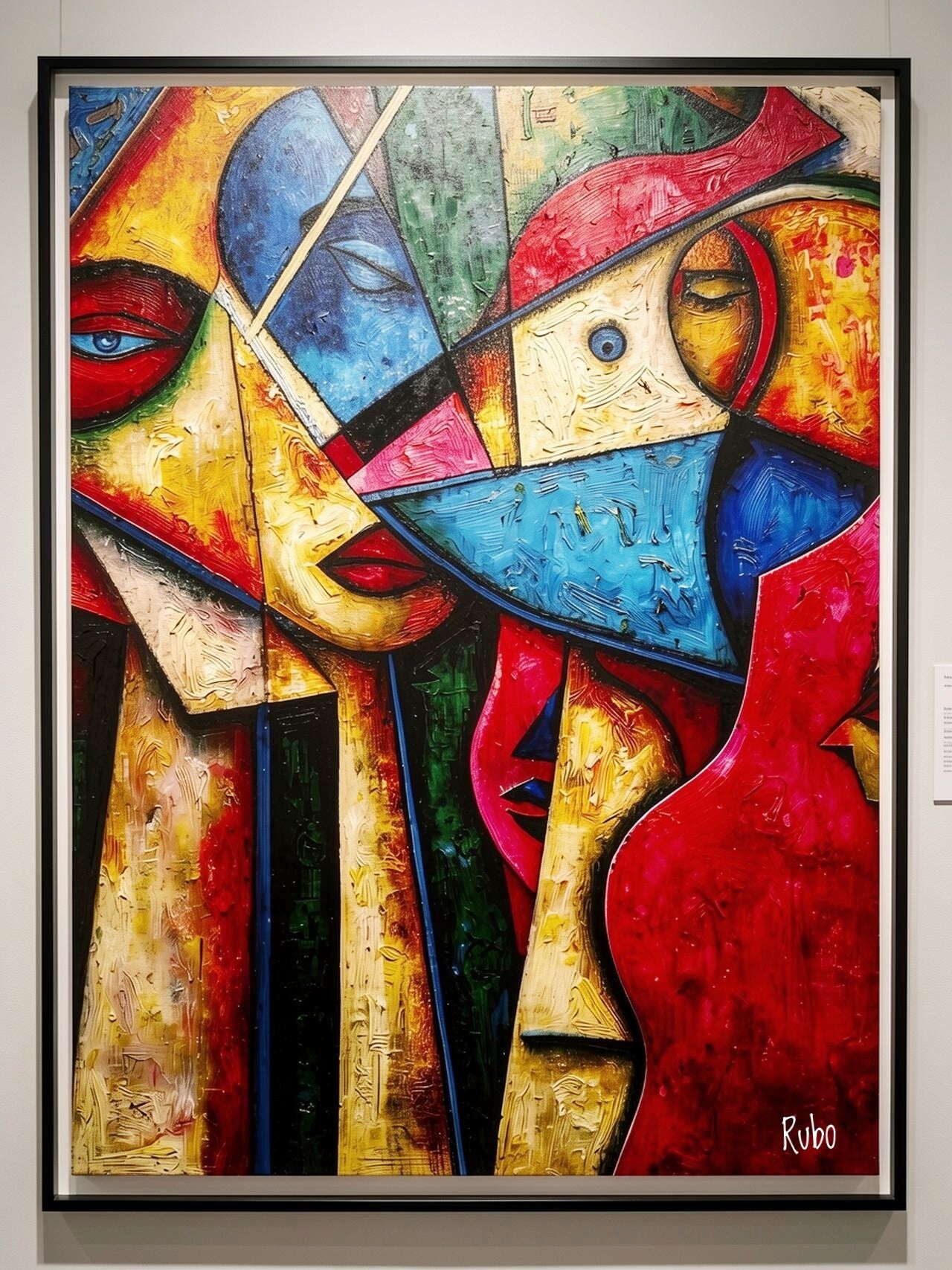
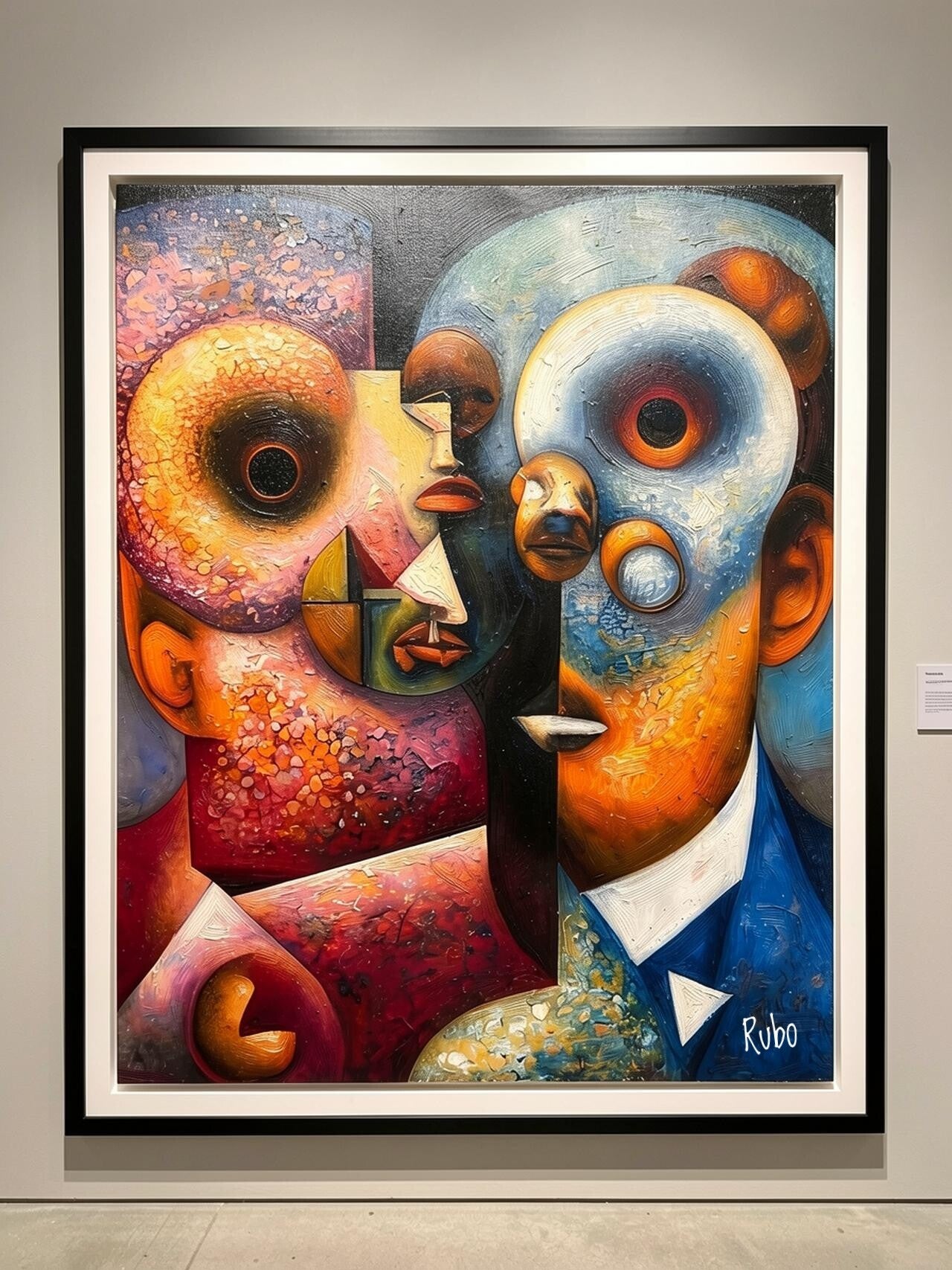
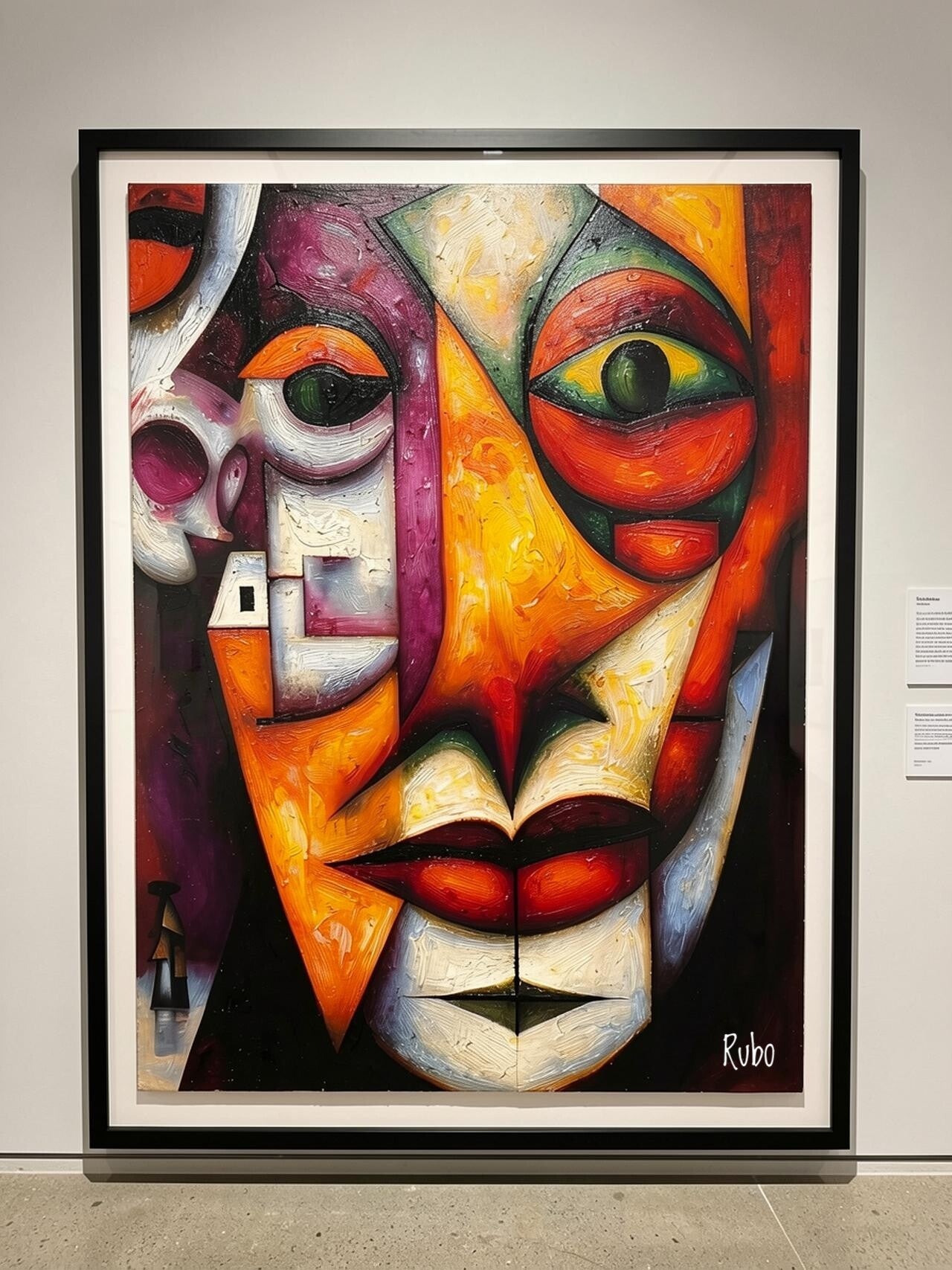
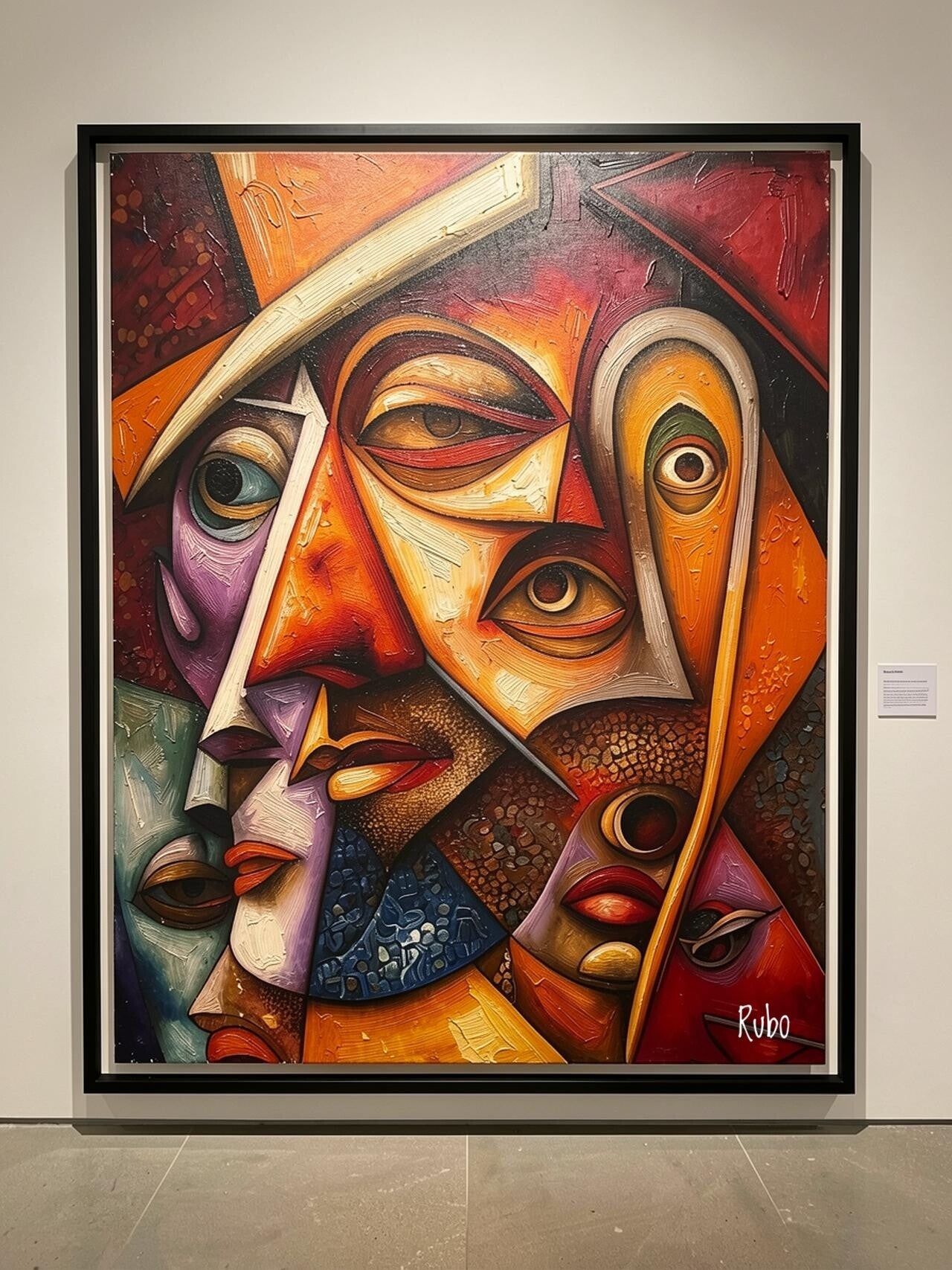
Modern Expressionist Cubism (often discussed in art history through derivative bridges like Expressionist Cubism, Orphism, or Cubist Expressionism) represents a dynamic synthesis of two of the most influential early 20th-century avant-garde movements: Cubism and Expressionism.
While traditional Cubism prioritizes intellectual structure, geometry, and spatial deconstruction, Expressionism prioritizes raw emotion, subjective feeling, and psychological intensity. Modern Expressionist Cubism bridges these two worlds—combining the fractured, multi-perspective geometry of Cubism with the vibrant color, emotional weight, and kinetic energy of Expressionism. Origins & Historical Background
The synthesis of Cubism and Expressionism emerged as artists across Europe sought to expand beyond pure geometric analysis.
-
The Foundations (1907–1914): Pablo Picasso and Georges Braque pioneered Analytical Cubism in Paris, reducing subjects to muted geometric facets. Concurrently in Germany, groups like Die Brücke (1905) and Der Blaue Reiter (1911) were exploring vivid color distortion and emotional discharge.
Gallerease -
Cross-Pollination in Central Europe: As Cubism spread to Germany, Austria, and Eastern Europe, artists like Franz Marc, Lyonel Feininger, and Paul Klee integrated Cubist facet-like grids with deep, symbolic color palettes and emotive themes.
-
The Post-War & Modern Revival: Mid-to-late 20th-century and contemporary modern artists revitalized this hybrid style to express existential tension, urban angst, or personal identity—using Cubist structure as an anchor for emotive brushwork and dynamic
Core Themes & Aesthetic Philosophy
Structural Emotion
Rather than using geometry purely for objective spatial breakdown, Modern Expressionist Cubists use fractured shapes to symbolize psychological states. Angular planes and sharp intersections mirror internal conflict, chaos, or tension.
Dynamic & Symbolic Color
Abandoning the beige and gray tones of early Analytic Cubism, this hybrid approach uses color as an active emotional driver. Saturated primary colors, clashing tones, and luminous backlighting elevate the mood of the geometric composition.
Human & Urban Conditions
Common subject matters include distorted portraiture, bustling modern cityscapes, existential human figures, and fragmented landscapes. The geometric fragmentation directly reflects the complexity and fractured nature of modern life.
Notable Pioneers & Influential Movements
-
Franz Marc & Wassily Kandinsky (Der Blaue Reiter): Marc adopted Cubist-Futurist geometric planes to depict animals and nature, infusing them with spiritual, vivid color symbolism.
-
Lyonel Feininger: Known for his "prismatic" Cubism, where architectural forms are fractured into delicate, luminous rays of light and emotion.
-
Robert & Sonia Delaunay (Orphism): Developed a brightly colored, lyrical branch of Cubism that heavily influenced expressionist color theory across Europe.
-
Pablo Picasso (Later Works): Masterpieces like Guernica (1937) serve as the ultimate historical archetype—employing Cubist spatial breakdown to convey profound horror, tragedy, and political protest.
-